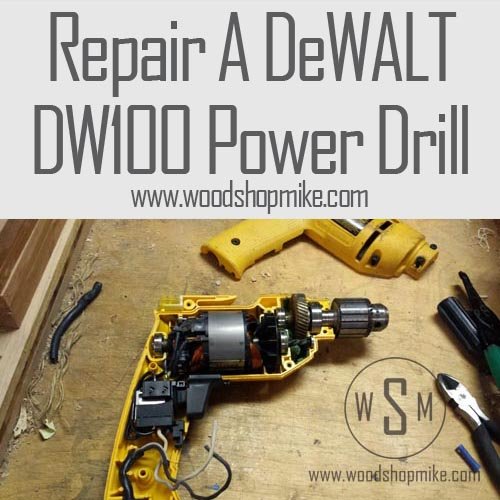
DeWalt DW100: The Workhorse Drill You Can Trust (And Fix!)
Did you know that the average lifespan of a power tool used by professionals can be extended by up to 30% with proper maintenance and simple repairs? That’s a huge return on investment, especially for a tool as essential as a drill. The DeWalt DW100, a popular corded model often found on job sites and in home workshops, is no exception. While known for its durability, even the toughest tools can develop quirks. Understanding common issues and how to address them, or when a review of its capabilities is in order, can save you time, money, and a whole lot of frustration. Let’s get into what makes the DW100 tick, what might go wrong, and what you can do about it.
What Exactly is the DeWalt DW100?
The DeWalt DW100 is a corded, 3/8-inch drill designed for general-purpose drilling tasks. It typically features a powerful motor for its class, providing ample torque for driving screws and drilling holes in various materials like wood, metal, and plastic. Its robust construction, a hallmark of DeWalt tools, means it’s built to withstand the rigors of daily use. This drill often comes with a variable-speed trigger and a reversing function, offering control and versatility for different applications. It’s a no-nonsense tool, prioritizing performance and reliability over excessive features, making it a favorite for electricians, plumbers, and serious DIYers.
This drill isn’t some fancy cordless wonder with a battery that dies at the worst possible moment. Its corded nature means consistent, unwavering power. You don’t have to worry about charging cycles or the gradual decrease in performance as a battery drains. When you plug it in, it’s ready to go at full capacity, every single time. I’ve personally found myself reaching for a corded drill like this when I know a job will be lengthy or require sustained high torque; the peace of mind is palpable.
Why Choose a Corded Drill Like the DW100?
Corded drills, like the DeWalt DW100, offer an undeniable advantage in terms of sustained power and cost-effectiveness over their cordless counterparts. Without the expense and potential failure of batteries, the initial purchase price is often lower, and the long-term running costs are significantly reduced. For tasks requiring continuous operation or high torque, such as mixing mud or drilling large-diameter holes, a corded model provides a consistent power output that cordless drills can struggle to match, especially as their batteries age.
Furthermore, the simplicity of a corded tool translates to fewer points of potential failure. There are no complex battery management systems, no charging docks to misplace, and no worries about battery degradation over time. In my experience, when I need a drill to perform a demanding, repetitive task for an extended period, the corded option is almost always the go-to for its sheer reliability. I remember a particularly grueling deck-building project where the cordless drills were constantly swapped out for charging; the corded drill just kept going, hour after hour.
Common DeWalt DW100 Issues and Simple Fixes
Even the most reliable tools can encounter problems. For the DeWalt DW100, common issues often stem from wear and tear on the chuck, brushes, or trigger switch. A sticking chuck might be remedied by cleaning and lubricating the mechanism, or potentially replacing worn chuck jaws. If the drill suddenly loses power or runs erratically, worn carbon brushes are a frequent culprit; these are relatively inexpensive and straightforward to replace. A faulty trigger switch, while less common, might require desoldering and replacing the switch assembly.
I’ve seen this firsthand with a colleague’s DW100 that started making a grinding noise. Initially, we feared the worst, perhaps a gearbox issue. But upon inspection, it turned out to be a small piece of metal debris that had lodged itself within the chuck mechanism. A quick clean-out with compressed air and a light application of lubricant, and it was running like new. It’s often the small, overlooked details that cause the biggest headaches.
How to Maintain Your DeWalt DW100 for Longevity
Proper maintenance is key to extending the life of any power tool, and the DeWalt DW100 is no exception. Regularly cleaning dust and debris from the motor vents prevents overheating and ensures optimal performance. Periodically checking and tightening all external screws maintains structural integrity. Lubricating the chuck mechanism, as mentioned earlier, is also crucial. If you’re comfortable, inspecting and potentially replacing the carbon brushes every few years, depending on usage, can prevent more significant motor issues down the line.
A specific maintenance task that often gets overlooked is checking the power cord for any nicks or damage. A frayed cord isn’t just an inconvenience; it’s a serious safety hazard. My own DW100 had a close call when the cord got caught on rebar; a quick visual inspection revealed a small tear that I promptly repaired with heavy-duty electrical tape. It’s a simple step, but it prevented a potentially dangerous situation and ensured the tool remained operational.
When to Consider a DeWalt DW100 Repair vs. Replacement
Deciding whether to repair or replace your DeWalt DW100 often comes down to the nature and cost of the repair versus the price of a new or comparable used tool. Minor issues like worn brushes or a slightly sticky chuck are typically inexpensive and easy repairs. However, if the motor has burned out, the gearbox is severely damaged, or the main housing is cracked, the cost of parts and labor could easily approach or exceed the price of a new drill. Many users find that for under $100, a replacement is often the most sensible economic choice.
What most overlook is the value of your time. If a repair requires specialized tools or significant diagnostic effort, the hours spent troubleshooting and fixing might be better invested in earning money with a new, reliable tool. For instance, a deep motor issue could take a weekend to diagnose and fix, time that could be spent completing paying jobs. This calculation is different for a hobbyist versus a professional tradesperson, of course.
DeWalt DW100 Review: Strengths and Weaknesses
The DeWalt DW100 shines with its raw power and durability. Users consistently praise its robust build quality, capable of handling demanding tasks without faltering. Its straightforward design means fewer electronic components to fail, contributing to its reputation for reliability. The comfortable grip and balanced weight distribution also make it manageable for extended use, despite its corded nature. Its affordability compared to higher-end or even some cordless models makes it an attractive option for those on a budget who still need professional-grade performance.
However, the DW100 isn’t without its drawbacks. Its corded design inherently limits its portability and requires access to a power outlet, which can be inconvenient on large or remote job sites. Unlike some modern drills, it may lack advanced features like hammer drill functionality or a built-in LED work light. Furthermore, while durable, replacement parts can sometimes be difficult to source for older models, making repairs more challenging if a critical component fails. This means a minor issue could necessitate a full replacement if a specific part is discontinued.
Who is the DeWalt DW100 Best Suited For?
This drill is an excellent choice for tradespeople who regularly perform tasks requiring sustained power and torque, such as cabinet installers, metal fabricators, or those involved in construction. Homeowners undertaking significant DIY projects, like building decks, fences, or renovating extensively, will also appreciate its reliable performance. It’s particularly well-suited for users who prioritize power and longevity over the ultimate convenience of cordless tools and who have consistent access to power sources. If you’re tired of batteries dying mid-project, this is your machine.
Budget-conscious professionals and serious hobbyists often find the DW100 hits the sweet spot. It provides a level of performance that punches above its price point. I’ve seen many workshops where a DW100 sits alongside more expensive cordless tools, used specifically for those high-demand, continuous-use applications where battery life isn’t a factor and consistent power is king. It’s the reliable workhorse you can always count on when the pressure is on.
Alternatives to the DeWalt DW100
While the DW100 is a solid choice, exploring alternatives can illuminate different features or price points. For enhanced portability, DeWalt’s own XR Li-Ion cordless drill series offers comparable power with the freedom of movement, though at a higher initial cost due to battery and charger inclusion. Brands like Makita, Bosch, and Milwaukee also offer competitive corded drills with varying power ratings and ergonomic designs. If your needs lean towards lighter-duty tasks, a smaller, less powerful corded drill might suffice and save you money. Conversely, for heavy-duty applications like concrete drilling, a hammer drill or rotary hammer would be a more appropriate, albeit more expensive, alternative.
I recall a situation where a contractor friend was considering the DW100 but ultimately opted for a slightly more powerful corded model from Makita because he frequently needed to mix small batches of grout. The Makita had a higher RPM and slightly more torque, which was essential for that specific, albeit infrequent, use case. It’s a reminder that even within the same tool category, subtle differences can make one model a better fit than another depending on your exact requirements.
The Future of Workhorse Drills
The evolution of power tools continues at a rapid pace, with battery technology constantly improving, offering longer runtimes and faster charging. However, the demand for reliable, powerful corded tools like the DeWalt DW100 isn’t likely to disappear. Future iterations might see improved motor efficiency, enhanced ergonomics, and perhaps even integrated dust collection ports. For now, the DW100 stands as a testament to DeWalt’s commitment to producing dependable tools that professionals and serious DIYers can rely on for years, provided they receive a little attention now and then. It’s a machine built for the grind, offering consistent performance when it matters most.
Thinking about the next decade, we’ll likely see even more advanced battery chemistries making cordless truly competitive for even the most demanding tasks. But for sheer, unadulterated, plug-in-and-go power, corded drills will hold their ground. I can picture new models integrating smart diagnostics that alert you to potential issues before they become critical failures, making maintenance even more proactive. Until then, keeping your current tools in good shape is the best strategy.
