The Unexpected Silent Killer of Table Saw Accuracy
Did you know a misaligned table saw fence can add over 3 millimeters of error to a 30-centimeter cut? That’s nearly an eighth of an inch, enough to render a project unusable or, worse, create dangerous kickback situations. Many woodworkers, even experienced ones, overlook this critical detail, attributing imperfect cuts to their own skill rather than the machine’s calibration. This subtle drift in alignment is often the silent saboteur of precision woodworking, turning dream projects into frustrating failures before they even truly begin. But the good news is, correcting this is simpler than you might imagine and dramatically impacts the quality of your work.
Why Table Saw Performance Suffers Without Regular Tuning
A table saw is a complex machine where numerous components must work in concert. Its performance degrades not from a single catastrophic failure, but from a thousand tiny compromises. The arbor, housing the blade, can develop a slight wobble due to worn bearings. The trunnions, which hold the arbor assembly and allow for tilt adjustments, can loosen over time, especially with frequent movement. Dust accumulation is a relentless enemy, packing into mechanisms and impeding smooth operation, leading to inconsistent blade height and tilt. Even the table insert, the part surrounding the blade, can become slightly proud or recessed, disrupting material flow and causing tear-out. These aren’t usually obvious issues; they’re subtle shifts that, when combined, drastically reduce the saw’s accuracy and safety. For instance, a study by woodworking safety experts found that over 60% of table saw kickback incidents could be directly linked to improper blade alignment or fence issues, problems often exacerbated by accumulated dust and loose components.
Then there’s the fence. This is arguably the most frequently used part of the saw for ripping operations, guiding the wood through the blade. If the fence isn’t perfectly parallel to the blade’s path, every rip cut will be slightly tapered. This might not be noticeable on a short, thick board, but on longer, thinner stock, the deviation becomes pronounced. A fence that binds or sticks intermittently also poses a significant hazard, potentially causing the wood to bind against the blade, leading to kickback. Think about cutting a long 1×4 for shelving; if the fence is off by just a fraction of a degree, the end product will be noticeably wider than the beginning, making it impossible to join pieces cleanly or achieve consistent dimensions across multiple boards.
Achieving Perfect Blade-to-Fence Alignment: The Golden Rule
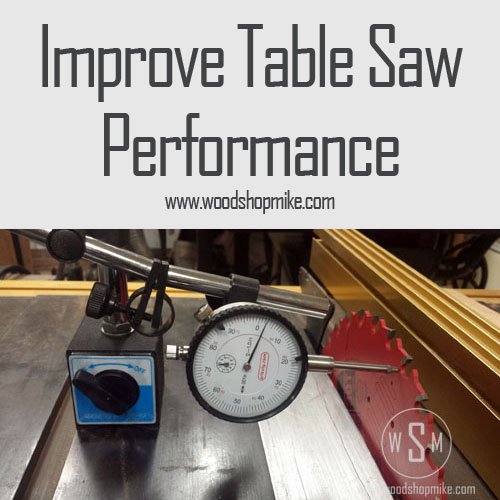
This is where many woodworkers falter. The ideal is a fence that is perfectly parallel to the blade at a 90-degree cut. Even a slight deviation, as I mentioned earlier, can throw off your entire project. I remember a particularly frustrating build where I kept getting inconsistent widths on my drawer sides. I spent hours checking my measurements, my technique, even the wood itself, before finally realizing my fence was barely off – maybe 1/32nd of an inch over its length. It sounds minuscule, but it was enough to make every single piece slightly different. A simple dial indicator, clamped to the table and swept against the blade’s teeth as the arbor is rotated, is the most accurate way to check this. You want to see zero runout. Then, you check the fence’s parallelism to the blade at both the front and back of the saw table. The goal is absolute parallelism; any gap or contact at either end indicates an adjustment is needed.
Adjusting the fence parallelism usually involves the adjustment screws located on the fence rails or the trunnions. This process can be finicky. You might tighten one screw only to find it throws off the alignment at the other end. Patience is key. Making small, incremental adjustments and re-checking with your indicator is the only way to achieve true precision. Many fences also have a mechanism to ensure they are parallel to the miter slots as well, which is another layer of accuracy to consider, especially if you use jigs that register against the miter slots.
Calibrating Blade Height and Tilt for Optimal Cuts
Beyond fence alignment, the blade itself needs to be perfectly positioned. Blade height is critical for safety and cut quality. A blade raised too high increases the risk of kickback and can lead to rougher cuts on the top surface. A blade that’s too low reduces cutting efficiency and can result in a less clean cut. The general rule of thumb is to have the blade teeth extend about 1/8 to 1/4 inch above the workpiece. This provides sufficient material for a clean cut without exposing excessive blade to cause issues. I’ve found that using a simple depth gauge or a ruler to set this height consistently, especially when switching between different stock thicknesses, makes a noticeable difference in the finish of the cut surface.
Blade tilt calibration is another area often neglected. When you set your saw to 45 or 90 degrees, you need to be certain it’s actually at that angle. A slight over- or under-tilt will result in angled cuts that don’t join properly. Most saws have indicator marks, but these can be inaccurate. Using a precise angle gauge or a digital inclinometer is far more reliable. When checking the 90-degree setting, ensure the blade is perfectly perpendicular to the table. For angled cuts, verify the precise angle. I recall a project where I needed to make perfect compound miter cuts for a box. I thought my saw was dialed in, but a slight inaccuracy in the detent for the 45-degree tilt meant my corners weren’t quite meeting flush. A quick recalibration of the tilt stop solved the problem immediately, saving me hours of sanding and filling.
The Crucial Role of Blade Selection and Maintenance
The blade itself is the business end of your table saw. Using the wrong blade for the job, or a dull, dirty blade, will sabotage even the best-tuned machine. For general ripping, a blade with fewer teeth (24-40) and larger gullets is ideal, as it removes material quickly and efficiently. For crosscuts or fine furniture work, a blade with more teeth (60-80) will provide a smoother finish. Think about cutting a sheet of plywood versus a solid hardwood plank. A 24-tooth ripping blade on plywood will likely result in significant tear-out on the top surface. Conversely, trying to rip a thick oak board with an 80-tooth blade will be slow and could overheat the motor.
Blade maintenance is equally vital. A dull blade doesn’t cut; it burns and tears. The increased friction also puts extra strain on the motor and can lead to overheating and reduced performance. Sharpening blades regularly, or replacing them when they become dull, is a non-negotiable step. Furthermore, blades accumulate resin and pitch, especially when cutting softwoods or certain hardwoods. This buildup can affect the blade’s cutting angle and efficiency. Regular cleaning with a blade cleaner solvent will keep your blades performing at their peak. I’ve seen woodworkers hesitate to spend money on good blades or sharpening services, only to waste countless hours wrestling with poor cut quality and inefficient cuts. It’s false economy.
Dust Management: The Unseen Performance Enhancer
Dust is more than just a nuisance; it’s a performance killer for your table saw. It clogs trunnions, interferes with fence movement, accumulates on blade washers, and can even affect the motor’s cooling. A well-maintained dust collection system, either a shop vac attached to the saw’s dust port or a more robust central system, is essential. You should aim for a system that captures at least 90% of the dust generated. Without adequate dust collection, fine particles get everywhere, creating friction, reducing accuracy, and shortening the lifespan of your machine’s components. I’ve personally experienced how a clogged dust port can lead to sawdust building up inside the cabinet, making blade changes more difficult and potentially affecting the trunnion mechanisms over time.
Beyond the main dust port, consider adding dust collection points near the blade guard or splitter. Some high-end saws have integrated solutions, but DIY additions can be made to older models. Periodically cleaning out the internal mechanisms of the saw – the trunnion housing, the blade arbor area, and the motor cooling fins – is a necessary maintenance step that’s often overlooked. A clean saw operates more smoothly, stays cooler, and maintains its accuracy far longer. For example, a saw with gummed-up trunnions might exhibit a slight but noticeable sag when tilted to an angle, leading to inconsistent bevel cuts.
Upgrading Your Table Saw’s Incidental Components
Sometimes, improving performance isn’t about tuning the existing parts but about replacing them with better ones. The stock throat plate (or insert) that surrounds the blade is often made of plastic and can be a source of tear-out or snagging. Upgrading to a zero-clearance insert, typically made of phenolic or MDF, provides much better support for the wood right up to the blade. This drastically reduces tear-out, especially on plywood and veneers. I’ve found that a zero-clearance insert for dado cuts is particularly transformative, preventing slivers of wood from getting caught between the dado blade and the insert.
Another common upgrade is the fence itself. While many stock fences are decent, aftermarket options offer greater rigidity, smoother operation, and more precise adjustment mechanisms. A high-quality Biesemeyer-style fence, for instance, provides a rock-solid reference that rarely needs recalibration once set. These fences ensure absolute parallelism with the blade, a feature that pays dividends in cut accuracy over time. The initial investment can seem substantial, but the consistent results and reduced frustration are well worth it for anyone serious about woodworking.
Fine-Tuning with Accessories: Enhancing Precision Further
Beyond the core components, a few well-chosen accessories can further refine your table saw’s performance. Push sticks and push blocks are safety essentials, but specialized versions can also aid in control and accuracy. For instance, a tall push block can help maintain consistent pressure against the fence during a rip cut, preventing slight deviations. Featherboards are another excellent tool; they apply outward pressure against the fence, holding the workpiece firmly against it and the table. This eliminates the possibility of the wood drifting away from the fence during the cut, which is crucial for accurate rips.
Consider also a router attachment for your table saw’s extension wing, or a crosscut sled. A well-built crosscut sled, with perfectly aligned runners in the miter slots and a square fence, essentially turns your table saw into a super-accurate miter box. It’s invaluable for making square cuts on smaller pieces or for ensuring perfect 90-degree angles on multiple identical parts. My own crosscut sled, built from Baltic birch plywood and featuring precisely fitted runners, has been a game-changer for repeatable accuracy on small joinery projects.
The Unseen Benefit: Enhanced Safety Through Precision
While accuracy and cut quality are the primary drivers for improving table saw performance, the safety benefits are equally profound. A precisely aligned fence and blade minimize the chances of the wood binding against the blade, a leading cause of dangerous kickback. A properly tensioned and clean blade cuts smoothly, reducing the likelihood of the blade suddenly grabbing the wood. Dust collection, by keeping the saw’s mechanisms clear, ensures that adjustments like blade height and tilt operate smoothly and predictably. For example, if your blade height adjustment mechanism is gummed up with dust, it might suddenly slip, causing an unexpected change in blade exposure that could lead to an accident.
Ultimately, a well-tuned table saw is a predictable tool. You know what to expect when you make a cut, and that predictability is the bedrock of safe operation. When components are loose, misaligned, or dirty, the saw becomes unpredictable, and that’s when accidents happen. Investing time and effort into tuning your saw isn’t just about achieving perfect joinery; it’s about ensuring you go home safely after every woodworking session. I’ve seen projects where the pursuit of perfection led to better understanding of the machine, which in turn fostered a deeper respect for its power and potential dangers.
Beyond Tune-Ups: The Mindset Shift for Consistent Results
Improving table saw performance isn’t a one-time event; it’s an ongoing process. It requires developing a habit of checking key alignments – fence to blade, blade to miter slot, and blade perpendicularity – before starting critical cuts, especially after moving the saw or making significant adjustments. This vigilance prevents small errors from compounding. Think of it like a musician tuning their instrument before a performance; a few moments of adjustment yield a far superior outcome. My own routine now includes a quick fence-to-blade check with a feeler gauge before I begin any significant ripping operation, a habit that has saved me from numerous potential mistakes.
Finally, understand that your table saw’s performance is a reflection of your attention to detail. A perfectly tuned saw can still produce poor results if the operator isn’t attentive. Conversely, even a moderately capable saw, when meticulously tuned and operated with care, can yield impressive precision. The real magic happens when you combine a well-maintained machine with a skilled and attentive operator, creating a synergy that transforms raw lumber into works of art, consistently and safely.
