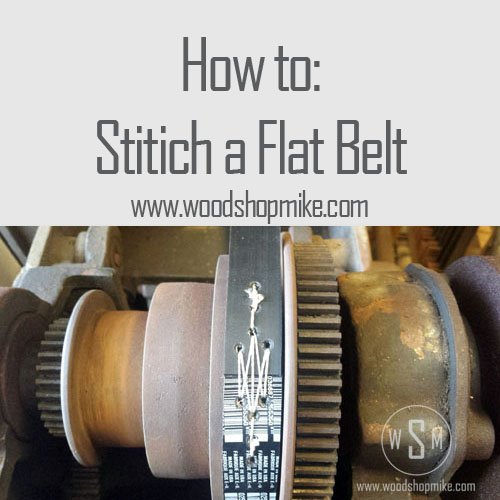
Why Would You Stitch A Flat Belt?
Did you know that millions of industrial machines worldwide still rely on flat belts? These aren’t your grandma’s sewing projects; we’re talking about heavy-duty power transmission. A surprising 20% of belt-related downtime in older manufacturing facilities can be attributed to improperly maintained or incorrectly fitted belts, and stitching is often a key part of the solution. When a new belt isn’t an immediate option, or for specific niche applications, stitching a flat belt can be the difference between a standstill and a productive day. It’s a practical skill that keeps machinery humming when the unexpected happens.
You might wonder why anyone would choose to stitch a belt when pre-made options abound. The answer often lies in cost-effectiveness and immediate necessity. Imagine a critical conveyor belt in a food processing plant snapping on a Friday evening. Ordering a replacement might take days, leading to significant product spoilage. Stitching, if done correctly, offers a temporary but viable fix, preventing costly losses. Or consider specialized agricultural equipment where custom-length belts are rare and expensive; stitching allows for on-the-fly adjustments. It’s a repair method born out of practicality and a deep understanding of operational demands.
Understanding The Anatomy Of A Flat Belt
Before we get our hands dirty, let’s clarify what we’re dealing with. Industrial flat belts are typically constructed from layers of durable materials like rubber, canvas, leather, or synthetic polymers. These layers are bonded together under heat and pressure, creating a strong, flexible band. The ’stitching‘ we’re discussing usually refers to creating a ‚V-splice‘ or a ‚hook splice‘ to join the two ends of the belt together, forming a continuous loop. This isn’t about sewing seams in the traditional sense; it’s about mechanically joining the ends to transmit power efficiently without slippage. A correctly executed splice is critical for belt longevity and machine performance.
The material composition dictates much about the belt’s capabilities and how it should be handled. Leather belts, for instance, were once commonplace and possess excellent grip but are susceptible to moisture damage. Modern synthetic belts, like those made from polyurethane or reinforced fabrics, offer superior tensile strength and resistance to oils and abrasions. The thickness and width of the belt also play a huge role in its power transmission capacity. A heavy-duty steel mill conveyor belt, perhaps 8 inches wide and half an inch thick, requires a far more robust splicing technique than a small fractional horsepower motor belt found in a workshop. I’ve seen belts fail prematurely simply because the splice wasn’t designed for the belt’s material and load.
When Is Stitching The Go-To Solution?
Stitching a flat belt becomes the preferred method primarily in situations demanding immediate repair or when custom sizing is paramount. For example, a farmer operating an older combine harvester might face a sudden belt failure during peak harvest season. Waiting for a specialized replacement could jeopardize the entire crop. In such a scenario, a technician can often stitch a suitable belt material to the correct length on-site, allowing the harvest to continue. This immediate repair prevents catastrophic financial losses. It’s a pragmatic choice when time is of the essence and operational continuity is non-negotiable.
Beyond emergency repairs, stitching is invaluable for creating custom-length belts where standard sizes are unavailable or prohibitively expensive. Think of unique applications in historical machinery restoration or in developing bespoke industrial setups. A museum restoring a 19th-century printing press might require a very specific belt length and material; stitching offers the flexibility to match those exact specifications. Similarly, a niche manufacturer creating specialized packaging equipment might need belts of non-standard dimensions. Rather than sourcing a costly custom-made belt, they can purchase raw belt material and stitch it to the precise requirements, saving significant capital. In my experience, this customisation aspect is often overlooked but is a major driver for on-site belt splicing.
Essential Tools For A Successful Splice
To perform a flat belt splice effectively, you’ll need a specific set of tools, and having them readily available can make all the difference. At a minimum, you’ll require a sharp belt cutter or a heavy-duty utility knife to ensure clean, straight edges on the belt ends. A measuring tape is, of course, crucial for accuracy. For creating the splice itself, specialized tools are often employed. A belt punch or an awl is needed to create clean holes for the stitching material. Depending on the splice type, you might need a grooving tool to create a countersunk channel for the lacing. The correct stitching material itself—be it durable synthetic cord, wire lacing, or even specialized metal fasteners—is fundamental.
A key piece of equipment, particularly for heavier belts, is a belt-hook setting tool or a specialized splicing press. These tools apply the necessary pressure and alignment to properly embed the lacing or fasteners into the belt material. For wire lacing, a wire cutting and crimping tool is indispensable. I recall a job where we were attempting a hook splice on a thick rubber conveyor belt. Without the proper setting tool, we were struggling to seat the hooks evenly, leading to potential weak points. Using the correct tool, which applies uniform pressure, made the process significantly smoother and the resulting splice far more reliable. It’s one of those ‚aha!‘ moments when you realize the right tool isn’t just helpful; it’s absolutely necessary for a professional outcome.
The V-Splice Method: A Step-By-Step Guide
The V-splice, often used for leather or fabric belts, involves cutting the belt ends at opposing angles to create a tapering effect. First, carefully measure and mark the belt ends. You’ll need to cut each end at a precise angle, say 15 degrees, ensuring the angles oppose each other to form a smooth ‚V‘ when joined. A sharp belt knife or a specialized angled cutter is best for this. Make sure your cuts are clean and free from fraying. A poorly cut edge will compromise the splice’s integrity and lead to premature failure. I always recommend using a metal ruler as a guide for these angled cuts to ensure maximum precision.
After cutting the angles, you’ll punch holes along the angled edges. The spacing and number of holes depend on the belt width and thickness, but generally, they should be evenly distributed. Then, using a strong, durable cord or thread, you’ll stitch through these opposing holes. The stitching pattern is vital; often, a ‚figure-eight‘ or a ‚zig-zag‘ stitch is employed to provide maximum strength and flexibility. You’ll want to pull the thread extremely tight with each pass. The goal is to create a continuous loop that is as strong, if not stronger, than the original belt material itself. A colleague once showed me a technique using a double-threaded needle and a stitching clam to keep the belt ends perfectly aligned and tensioned, which dramatically improved the splice quality.
Mastering The Hook Splice Technique
The hook splice, frequently used for rubber and fabric conveyor belts, utilizes metal hooks that interlock. This method is known for its strength and relative ease of installation, especially on wider belts. Begin by cutting the belt ends square and clean. Unlike the V-splice, no angled cuts are needed here. Next, you’ll use a belt punch to create evenly spaced holes along the belt edge. The spacing is determined by the size of the hooks you’re using; refer to the hook manufacturer’s recommendations for optimal placement. Proper hole alignment across both belt ends is absolutely critical for the hooks to engage correctly.
With the holes punched, you’ll carefully insert the metal hooks into the holes on one belt end. Then, position the second belt end so the hooks can be fed through the corresponding holes. This is where the specialized hook-setting tool comes into play. This tool pulls the hooks firmly into the belt material, creating a strong mechanical bond. You’ll work your way across the belt, ensuring each hook is securely seated. The result is a robust, continuous loop. What many overlook is the importance of ensuring the hooks are installed without creating excessive stress points at the hole edges; this can lead to premature tearing. When I first started with these, I’d sometimes crimp them too hard, almost pinching the belt material, which led to weak spots.
The Alligator® Lacing Method
Alligator® lacing, a popular brand name for a type of staple-like fastener, offers another robust method for joining flat belts, particularly in agricultural and industrial settings. This system uses two rows of opposing staple-like teeth that penetrate the belt ends and interlock. It’s incredibly strong and relatively quick to install. First, you’ll need to cut the belt ends squarely. Then, using a specialized tool (often a roller tool or a press), you’ll embed the lacing teeth into the belt material. The lacing comes in strips, and you simply position the strip onto the belt end and apply pressure.
The beauty of the Alligator system lies in its simplicity and the minimal tools required compared to some other methods. You typically just need a hammer or a specialized roller tool to drive the teeth in. The teeth are designed to splay out slightly within the belt material, creating a powerful grip. Once both ends are laced, you join them using a connecting pin that slides through the interlocking teeth. This creates a strong, flexible joint. A common pitfall is not ensuring the lacing is centered on the belt edge; off-center installation can lead to uneven wear and vibration. I’ve seen installations where the lacing was slightly skewed, causing the belt to run off-track within weeks.
When NOT To Stitch A Flat Belt
While stitching offers a valuable repair solution, it’s not a universal panacea. Certain high-speed or high-precision applications simply cannot tolerate the slight imbalance or potential for vibration that even the best splice can introduce. For instance, a serpentine belt in a modern automotive engine, which operates at thousands of RPMs and demands near-perfect balance, would never be a candidate for stitching. The slightest imperfection could lead to catastrophic engine failure. These applications require precisely manufactured, endless belts.
Furthermore, belts made from highly specialized composite materials or those with integrated features like timing teeth are generally not stitchable. These belts rely on their integrated design for functionality. Attempting to stitch them would not only compromise their performance but could also damage the intricate internal structure. If a belt has lost significant material due to wear or damage, stitching might only be a temporary patch rather than a sustainable solution. In cases of severe edge wear or deep gouges across the belt’s surface, replacement is often the only safe and reliable option. My rule of thumb? If the belt’s core integrity is compromised beyond the splice area, consider replacement.
Maintenance Tips For Spliced Belts
Once a belt has been spliced, its maintenance requires a bit more vigilance than an endless belt. Regularly inspect the splice area for any signs of wear, fraying, or loosening hooks or stitches. Pay attention to any unusual noises or vibrations coming from the belt drive, as these can indicate a developing problem with the splice. Keep the belt and the surrounding area clean; excessive dirt and debris can accelerate wear, especially around the splice. A simple visual inspection before each shift, especially on critical machinery, can prevent minor issues from becoming major breakdowns.
Proper tensioning is also absolutely critical for spliced belts. An incorrectly tensioned belt will put undue stress on the splice, leading to premature failure. Avoid overtightening, as this can deform the splice and wear down the belt material. Conversely, a belt that’s too loose will slip, causing inefficiency and heat buildup, which can also damage the splice. Always follow the manufacturer’s recommended tensioning guidelines for the specific belt and machinery. I once worked with a client whose forklift truck kept breaking belts; it turned out they were consistently overtightening them after every splice, simply because they didn’t have a reliable tension gauge. Investing in basic diagnostic tools like a tension meter is a smart move.
The Future Of Belt Joining
The techniques for stitching and splicing flat belts have been refined over decades, but the fundamental principles remain. While modern materials and manufacturing processes continue to yield increasingly durable and efficient endless belts, the need for on-site, rapid repair solutions like stitching isn’t disappearing anytime soon. Innovations in lacing materials, perhaps incorporating self-healing properties or enhanced wear resistance, might emerge. We might also see more sophisticated portable tools that further simplify and strengthen the splicing process, making it even more accessible.
Considering the ongoing drive for sustainability and resource efficiency in industry, the ability to repair rather than immediately replace is likely to remain highly valued. Imagine a future where advanced diagnostic sensors integrated into machinery can predict splice degradation weeks in advance, prompting a planned, efficient repair rather than an unexpected failure. This proactive approach, combined with refined splicing technologies, could further extend the operational life of flat belts, saving businesses both time and money. It’s a blend of time-tested techniques and forward-thinking technology.
