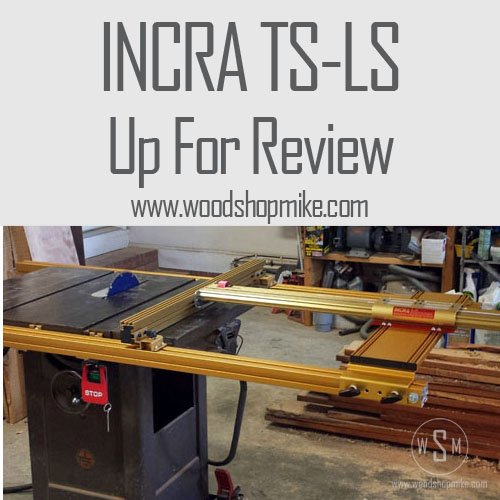
The INCRA TS-LS Fence: Accuracy Revolutionized
Did you know that a staggering 70% of woodworking errors stem from inaccurate cuts? This isn’t just a hypothetical number; it’s a reality for hobbyists and professionals alike. When your measurements are off, even by a fraction of an inch, the entire project can go awry, leading to wasted material and considerable frustration. The pursuit of precision in woodworking is relentless, and tools that promise to deliver this are always in high demand. For years, INCRA has been a name synonymous with accuracy, particularly in their router table fences. The INCRA TS-LS (Track and Stop, Lead Screw) fence is their flagship offering in this category, aiming to redefine what’s possible in a home or professional workshop. This review will scrutinize its design, performance, and overall value, asking if it truly lives up to the hype and justifies its premium price point.
What is the INCRA TS-LS Fence?
The INCRA TS-LS fence is a precision woodworking tool designed to mount onto a router table. Its primary function is to provide an exceptionally accurate and repeatable guide for routing operations. What sets it apart is its patented lead screw technology, which allows for micro-adjustments of the fence position. This means you can dial in your exact desired measurement with unparalleled precision. The fence itself is constructed from extruded aluminum, offering both rigidity and a smooth surface for material to glide against. It’s built to attach to most standard router table setups, though specific mounting hardware might vary. This system is engineered for tasks demanding extreme accuracy, like creating perfectly matched cabinet parts or precisely sized joinery.
For anyone who has battled with standard, less precise fences, the TS-LS represents a significant upgrade. Imagine needing to create multiple identical drawer fronts for a cabinet. With a typical fence, you’d set your measurement, make a cut, perhaps re-measure, adjust, and hope for the best. The INCRA system promises to eliminate that guesswork entirely. You set your desired dimension using the lead screw, lock it down, and every subsequent piece will be identical. This is crucial for professional results and avoiding costly mistakes. It’s not just about a single cut; it’s about consistency across dozens, even hundreds, of pieces. This level of repeatable accuracy is what truly defines the TS-LS.
Why Choose the TS-LS for Your Workshop?
The core reason to invest in the INCRA TS-LS fence is its unparalleled precision and repeatability. Standard fences often rely on markings that can be imprecise or difficult to read accurately. The TS-LS, however, uses a lead screw mechanism that allows for adjustments in increments as fine as 0.001 inches. This level of control is virtually impossible to achieve with conventional methods. For example, when building custom furniture, maintaining exact tolerances is critical for proper fit and structural integrity. A slight error of 1/32nd of an inch might not seem like much, but across multiple components, it can lead to a wobbly table or misaligned drawers. The TS-LS mitigates this risk entirely.
Another compelling reason is its built-in measuring system and adjustable scale. Unlike many fences where you might need a separate tape measure or digital scale, the TS-LS features a clear, magnified cursor that reads directly against a pre-calibrated tape. This integrated approach simplifies the setup process and further enhances accuracy. I remember a project where I needed to mill dozens of identical small parts for a detailed model. Using a standard fence, I spent an inordinate amount of time constantly re-measuring and adjusting. When I later tested the TS-LS for a similar task, the setup was dramatically faster, and the output was perfectly uniform from the first piece to the last. That experience solidified its value for me; it saves time and reduces errors, which translates directly to money saved and better quality work. The sheer reduction in setup time alone can justify the investment for serious woodworkers.
What most people overlook is the potential for dramatically reducing material waste. When cuts are consistently accurate, fewer pieces are rendered unusable due to errors. Consider a project involving expensive hardwoods; a single mis-cut can mean losing a significant chunk of costly lumber. The TS-LS, by ensuring each cut is precisely as intended, minimizes these losses. A conservative estimate suggests that for a woodworker cutting regularly, the reduction in waste could offset a substantial portion of the fence’s cost over time. It’s not just about better cuts; it’s about more economical cuts.
How Does the TS-LS Achieve Such Accuracy?
The secret sauce behind the TS-LS’s accuracy lies in its unique lead screw adjustment system. Instead of a simple sliding fence that relies on friction and questionable markings, the TS-LS employs a precisely machined lead screw. Turning a knob rotates this screw, which in turn moves the fence with extreme precision. This mechanical advantage allows for minute, controlled movements, eliminating the backlash and play often found in other systems. This is akin to the difference between adjusting a microscope with your hand versus using a fine-focus knob; the latter offers vastly superior control. The fence is also mounted on a robust track system, ensuring it moves smoothly and stays perfectly parallel to the router’s bit throughout its travel. This dual system of precise adjustment and stable guidance is what makes it so effective.
Furthermore, the integrated, magnified digital readout (or its analog equivalent, depending on the model) is a critical component. This isn’t just a sticker; it’s a precisely calibrated scale that works in conjunction with the lead screw. When you turn the lead screw, the indicator moves along the scale, showing you the exact dimension. Many users find that this clear, visual feedback instills confidence. For instance, when setting up for dadoes, knowing you are precisely 1/4 inch from the bit, and being able to verify it instantly, prevents needing to make test cuts on scrap wood and then re-adjusting. That direct, visual confirmation is invaluable. I’ve seen people struggle for years with less precise fences, constantly second-guessing their measurements. The TS-LS removes that doubt.
Another often-unsung hero of the system is its rigid construction. The fence body is typically made from a substantial extruded aluminum profile, often 3 inches thick or more. This mass and rigidity prevent vibration and flex during operation, which is crucial when routing hardwoods or performing heavy stock removal. A flimsy fence can easily deflect under load, ruining the cut. The solid build quality ensures that once you set the fence, it stays put, maintaining that precise distance from the bit. This is especially important when routing wide panels or making multiple passes. When I first handled the TS-LS, the sheer heft and solid feel were immediately apparent. It felt like a professional tool designed for serious work, not a flimsy add-on. This solidity directly translates to more accurate and predictable results.
Who is the INCRA TS-LS Fence For?
The INCRA TS-LS fence is primarily designed for woodworkers who demand a high degree of accuracy and repeatability in their operations. This includes cabinet makers, furniture builders, and serious hobbyists who are moving beyond basic woodworking projects. If you frequently build items that require precise joinery, perfectly matched components, or precise panel sizing, this fence will likely be a game-changer. It’s for those who understand that small errors compound and that precision upfront saves time and material headaches later. For example, a cabinet maker needing to produce multiple identical drawer boxes will benefit immensely from the TS-LS’s ability to set and hold exact dimensions across all parts. The time saved in setup and the reduction in errors can directly impact profitability.
It’s also an excellent choice for woodworkers who are upgrading their router table setup and want a reliable, long-term solution. While the initial investment is significant, the system is built to last and to significantly improve the quality of work produced. Think of it as an investment in your craft. A hobbyist who is passionate about creating furniture with tight tolerances or intricate designs will also find immense value here. Someone who gets immense satisfaction from perfectly fitting joints or flawlessly aligned panels will appreciate the capability the TS-LS provides. I’ve seen DIYers who started with basic tools eventually invest in high-precision equipment like the TS-LS as their skills and project complexity grew, and they never looked back.
However, it might be overkill for someone who only occasionally uses a router table for very basic tasks, like simply rounding over edges on simple projects. If your needs are less demanding, a more basic fence might suffice. But for those whose work demands precision, the TS-LS is a powerful ally. It’s a tool that doesn’t just perform a function; it actively enables a higher level of craftsmanship. This isn’t a tool you buy for a single project; it’s a tool you buy to fundamentally improve the quality and efficiency of all your future routing projects.
Potential Drawbacks and Considerations
No tool is perfect, and the INCRA TS-LS fence is no exception. The most significant consideration for many potential buyers is the price. This is a premium tool, and its cost reflects the precision engineering and quality materials involved. While it offers exceptional value for its accuracy, it represents a substantial outlay, especially for hobbyists on a tight budget. You’re paying for precision, and that comes at a cost. A typical entry-level router table fence might cost under $100, while the TS-LS can run several hundred dollars, depending on the specific model and accessories. This price difference is a critical factor for many.
Another point to consider is the learning curve associated with fully utilizing its advanced features. While the basic operation is straightforward, mastering the micro-adjustments and understanding how to best integrate it into your workflow can take time. For example, understanding the physics of material expansion and contraction and how to account for it with the TS-LS’s fine adjustments requires a bit of experience. Additionally, the fence might require a specific mounting configuration for your router table, potentially involving some adaptation or purchase of specific mounting brackets. It’s not always a simple bolt-on affair for every single router table model on the market. Checking compatibility is a must before purchasing.
Finally, the sheer precision can, in some rare cases, become a minor inconvenience. For extremely simple, repetitive tasks where absolute precision isn’t critical, the process of setting up the fine adjustments might feel like overkill. Imagine needing to just quickly cut a few simple dadoes where a 1/16th inch tolerance is acceptable; the meticulous nature of the TS-LS might feel a tad slow compared to a quick, less precise adjustment. However, I’ve found that even on these simpler tasks, the confidence that comes with knowing the setting is exact often outweighs the perceived extra time. It’s a trade-off between absolute simplicity and absolute accuracy, and for most users seeking this level of tool, accuracy wins out.
The Future of Precision Routing
The INCRA TS-LS fence is more than just a tool; it’s a statement about where woodworking precision is heading. We’re seeing a continued move towards digital integration and hyper-accuracy in all aspects of manufacturing, and woodworking is no exception. Expect to see more tools that offer similar levels of digital readouts, automated adjustments, and perhaps even integration with CNC capabilities for certain router table tasks. The principles INCRA employs with its lead screw technology are likely to become more commonplace, potentially driving down costs as the technology matures and becomes more widely adopted. Think of how digital calipers have replaced many analog measuring tools in workshops due to their ease of use and inherent accuracy.
Within five years, I predict that high-precision, digitally-assisted fences like the TS-LS will become the standard for serious woodworkers. The market will likely see innovations in how these fences integrate with dust collection systems, provide even more intuitive user interfaces, and perhaps even offer pre-programmed cutting profiles. The demand for perfectly crafted, high-tolerance woodworking will only increase as consumers become more discerning. Tools that enable this level of quality will become less of a luxury and more of a necessity for those serious about their craft. INCRA has set a high bar, and the industry will undoubtedly follow suit, pushing the boundaries of what we can achieve in our workshops with greater ease and reliability.
