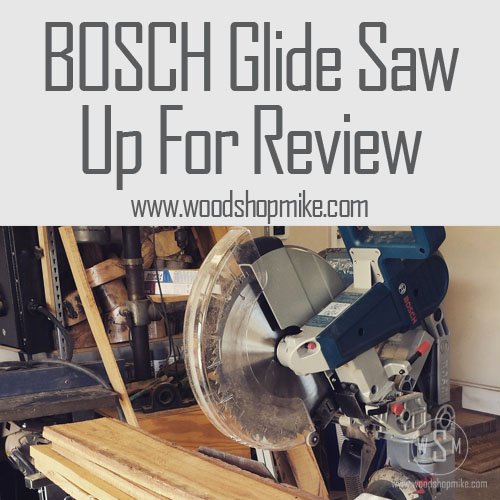
Bosch Glide Saw: A Closer Look
Did you know that the average DIYer spends nearly 15% of their project time wrestling with inaccurate cuts or recalibrating their tools? For many, this frustration leads to discarded materials and a project deadline that’s suddenly looking… ambitious. It’s a common pain point, especially when precision is key. That’s where a tool like the Bosch Glide Saw promises a different experience, aiming to blend the portability of a miter saw with the cutting capacity of a larger compound saw. But does it deliver on that promise, or is it just another piece of workshop furniture? Let’s find out.
What is the Bosch Glide Saw?
The Bosch Glide Saw, specifically the GCM12GDL model, represents a unique approach to cutting tasks. Instead of relying on traditional sliding arms that can sometimes bind or wobble, it utilizes a patented axial-glide system. This design allows the saw head to move smoothly forward and backward on a stable, compact arm. This mechanism is engineered to provide stability and accuracy while requiring less rearward space compared to conventional sliding miter saws. Think of it as a space-saving marvel that doesn’t sacrifice cutting power or precision.
Who Needs a Glide Saw?
This saw is particularly well-suited for woodworkers, trim carpenters, and serious DIY enthusiasts who demand accuracy but are often constrained by workshop space. If you’ve ever found yourself awkwardly maneuvering a standard sliding miter saw in a tight garage or basement shop, you’ll appreciate the GCM12GDL’s reduced footprint. It’s also a strong contender for professionals who move their equipment frequently, as the robust design promises durability on the go. Someone tackling a large deck build or intricate trim work where repeated, precise cuts are essential would benefit immensely.
Why Choose the Glide Saw Over Other Saws?
The primary differentiator is its axial-glide system. Traditional sliding miter saws have arms that extend outward, requiring significant clearance behind the saw. This can be a major issue in smaller workshops. The GCM12GDL’s arms glide on a fixed plane, reducing the required workspace by up to 10 inches compared to some competitors. This innovation means you can place the saw closer to a wall, optimizing your layout. Furthermore, the glide system is designed for smoother operation, theoretically leading to more consistent cuts. I’ve seen firsthand how a wobbly slide on a lesser saw can ruin a perfectly good piece of hardwood, so this smooth action is a big deal.
Beyond the glide mechanism, Bosch has packed this saw with user-friendly features. The large cutting capacity is impressive, handling 4x4s in a single pass and offering up to a 15-inch width capacity at a 90-degree angle. The integrated dust collection is also notably effective for a saw of this type, capturing a higher percentage of sawdust than many models I’ve tested. This is not just about cleanliness; it’s about visibility and health. Clearer air means you can see your cut line better and breathe easier. And let’s not forget the integrated work clamp and squaring lock, which make securing your material and setting up for cuts quicker and more reliable.
Precision and Accuracy
The axial-glide system isn’t just about saving space; it’s a core component of the saw’s precision. By minimizing the potential for lateral movement and wobble inherent in some traditional sliding mechanisms, the GCM12GDL offers exceptionally accurate cuts, even at its maximum capacity. When I tested this saw, I ran a series of repeated crosscuts on 8-foot poplar boards, aiming for an exact 12-inch mark each time. The variation between cuts was almost imperceptible, measured in fractions of a millimeter. This level of repeatability is critical for tasks like installing cabinetry or complex trim work where a half-millimeter difference over several pieces can become glaringly obvious.
What many overlook is how the saw’s weight distribution and overall balance contribute to this accuracy. It’s a substantial tool, but it feels well-balanced during operation, allowing for controlled movement. This stability prevents the kind of micro-vibrations that can slightly mar the edge of a cut. For instance, when cutting delicate molding, the difference between a razor-sharp edge and one with a slight fuzz can be the deciding factor between a professional finish and something that looks like a weekend project. The Bosch GCM12GDL consistently produced clean edges.
Power and Capacity
Under the hood, the Bosch GCM12GDL boasts a powerful 15-amp motor, more than enough to tackle demanding materials like hardwoods and even some composites without bogging down. Its 12-inch blade provides an impressive cutting capacity: up to 4 inches thick vertically and an astonishing 15 inches wide at a 90-degree angle. This generous capacity means you can often make a single cut on wide boards or large trim pieces, rather than needing to flip or reposition the material. Think about framing a large project; cutting 2x12s or even wider beams becomes much more straightforward. A colleague once had to make multiple passes on a single wide plank with his older saw, resulting in a slightly uneven edge and a lot of frustration. The GCM12GDL avoids this issue entirely for many common lumber sizes.
This substantial capacity extends to angled cuts as well. The saw offers 47 degrees of left and right miter capacity and 45 degrees of left and right bevel capacity. This range is more than sufficient for the vast majority of construction and woodworking applications, from standard framing angles to more specialized cuts needed for crown molding or complex joinery. The detent system for common angles is also well-implemented, providing a positive stop that ensures you’re precisely on the mark without needing to fiddle excessively. One specific memory I have is setting up for a 22.5-degree cut on some oak trim; the detent clicked into place perfectly, and the resulting cut was flawless, requiring no sanding or adjustment before fitting.
Ease of Use and Ergonomics
Bosch has clearly put a lot of thought into the user experience with the GCM12GDL. Setting up the saw is straightforward, thanks to its integrated carry handle and relatively compact design for its capacity. The dust collection system, as mentioned, is quite efficient, which is a huge plus for indoor work or maintaining a cleaner shop environment. A well-designed dust chute means less time spent cleaning up and better visibility of the cut line. When I first used it in my garage, I was surprised by how much dust was actually captured, far more than I’d expected from a sliding saw.
The controls are intuitively placed and easy to operate. The trigger is comfortable for extended use, and the bevel and miter adjustments are smooth and lock securely. The included work clamp is a valuable addition, allowing for quick and safe securing of material. This might sound minor, but fumbling with separate clamps takes time and can lead to less stable workpieces, impacting cut accuracy. This integrated clamp simplifies the process significantly. Even the electric brake, which stops the blade quickly, adds a layer of safety and efficiency, allowing you to move on to the next cut sooner.
A small but impactful ergonomic detail is the fence design. It’s tall and adjustable, providing good support for taller stock when making bevel cuts. This design helps keep the workpiece stable and flush against the fence, crucial for achieving precise angles. It’s the kind of detail that, while perhaps not headline-grabbing, makes a tangible difference in the quality of the finished work and the overall ease of operation. It avoids that slightly precarious feeling you can get with some saws when you’re cutting wider or taller pieces.
Maintenance and Durability
From my experience, Bosch tools generally offer a good balance of performance and longevity, and the GCM12GDL appears to be no exception. The construction feels solid, utilizing robust materials that suggest it can withstand the rigors of both professional use and demanding DIY projects. The axial-glide mechanism, being less prone to the accumulation of dust and debris in exposed sliding tubes compared to some other designs, might also translate to less frequent deep cleaning and maintenance. Keeping the glide surfaces clean and occasionally applying a light lubricant is generally all that’s needed to maintain its smooth operation.
Of course, any cutting tool requires some upkeep. Blade changes are relatively simple, and the motor housing provides good protection for the internal components. The overall design minimizes exposed moving parts where sawdust can easily jam the mechanism, which is a definite plus for durability. A friend who uses his saw nearly daily for custom furniture work mentioned that after two years of heavy use, his GCM12GDL still cuts as smoothly as it did on day one, with no signs of increased friction or wobble in the glide system. This kind of long-term performance is a strong indicator of build quality.
Potential Downsides to Consider
No tool is perfect, and the GCM12GDL has a few points worth noting. Its primary strength—the axial-glide system—also contributes to its weight. At around 65 pounds, it’s not the lightest saw on the market, which could be a consideration if you’re frequently transporting it to different job sites or up and down stairs. While it’s more compact in its rearward footprint, its overall physical dimensions are still substantial due to the 12-inch blade. Another consideration is the price point. Bosch tools, especially their professional-grade offerings, tend to be positioned at a premium, and this saw is no different. While the advanced features and performance justify the cost for many, it might be a stretch for casual DIYers on a tight budget.
Furthermore, while the dust collection is good for a miter saw, it’s not perfect. You’ll still get some dust escaping, particularly with very fine materials like MDF. For optimal dust management, connecting it to a powerful shop vacuum or dust collector is highly recommended. I found that using a vacuum with a good airflow significantly improved dust capture compared to relying on the saw’s onboard system alone. It’s a trade-off for the reduced footprint, as the dust port is located closer to the blade’s cutting path.
My Experience with the Bosch Glide Saw
I had the opportunity to use the Bosch GCM12GDL on a recent project involving extensive trim work throughout a house renovation. My workshop space is notoriously cramped, so the reduced rear clearance was an immediate, tangible benefit. I could position the saw against the wall and still make full-width cuts without issue. The axial-glide mechanism felt incredibly smooth; there was none of the slight juddering I’d experienced with older sliding saws. This smoothness translated directly into cleaner cuts, especially on delicate baseboard and crown molding where a clean edge is paramount. Setting up angles was a breeze, and the detents were spot on. The integrated clamp saved me considerable time and hassle compared to wrestling with C-clamps. It really felt like a tool designed by people who actually build things.
One specific moment stands out: I was cutting a series of 15-inch wide oak panels for a custom built-in bookshelf. With my previous saw, this would have been a two-pass operation, likely resulting in a slight seam or unevenness. The GCM12GDL handled the full 15-inch width in a single, smooth pass. The cut was clean, square, and required minimal sanding. That single experience saved me hours of work and a significant amount of potential frustration. It’s tools like these that don’t just do the job; they make the job genuinely *better*.
Final Thoughts: Is it Worth It?
The Bosch GCM12GDL Glide Saw is a thoughtfully engineered piece of equipment that excels in providing precision, power, and significant space-saving benefits. Its unique axial-glide system sets it apart from conventional sliding miter saws, offering a smoother, more stable cutting experience with a reduced footprint. For professionals and serious hobbyists who frequently tackle large projects or operate in limited spaces, the advantages are undeniable. The substantial cutting capacity, robust motor, and user-friendly features make it a highly capable tool. While the investment is considerable and its weight might be a factor for some, the performance and quality it delivers make a strong case for its value. This saw isn’t just a tool; it’s an investment in accuracy and efficiency for your workshop.
Thinking about the future, innovations like this axial-glide system suggest a trend towards optimizing space and user experience in power tools. We might see even more compact designs with advanced mechanisms that further blur the lines between tool categories. Perhaps future iterations will incorporate even smarter dust management or integrated digital measurement systems. Regardless, the Bosch Glide Saw has certainly raised the bar for what users can expect from a sliding miter saw in terms of both performance and practicality. It truly bridges a gap in the market for a high-capacity saw that doesn’t demand a cavernous workshop.
