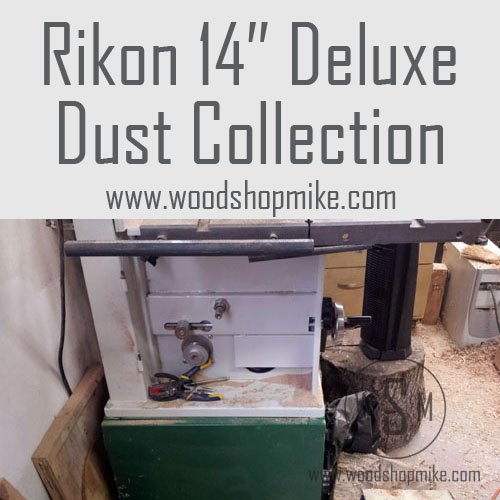
Why is dust collection on my Rikon 14 Deluxe bandsaw so problematic?
Did you know that fine wood dust, particularly from hardwoods like oak or maple, can contain silica particles that are harmful when inhaled? Many woodworkers, myself included, initially underestimate the sheer volume of dust a bandsaw, especially a robust model like the Rikon 14 Deluxe, can generate. It’s not just about keeping the workshop tidy; it’s a critical health and safety issue. The Rikon 14 Deluxe, a fantastic machine for its power and cutting capacity, often struggles with efficient dust extraction right out of the box. The standard dust port, typically a 4-inch outlet at the base, simply can’t keep up with the aggressive tooth engagement and rapid material removal this saw is capable of. I’ve seen countless setups where the lower chamber fills with fine sawdust within minutes of operation, rendering the primary dust collection port nearly useless. This accumulation not only creates a significant mess but also clogs the lower blade guard and can even impede the trunnion movement over time. It’s a common frustration, and understanding why it happens is the first step to fixing it.
The design of the Rikon 14 Deluxe, while excellent for cutting, presents a few inherent challenges for dust management. The large, open base cabinet, while providing ample space for blade storage, also acts like a massive dust collection chamber. Without a well-sealed system and efficient airflow, dust simply settles and accumulates rather than being drawn out. Furthermore, the path dust takes from the blade to the single dust port is often indirect and tortuous, with numerous ledges and corners where fine particles can cling and build up. This means that even with a decent dust collector attached, the suction might not be reaching the critical areas around the blade throat and the lower guard effectively. It’s a classic case of a machine’s performance characteristics creating a secondary problem that requires dedicated attention.
How can I improve dust collection on my Rikon 14 Deluxe bandsaw?
Improving dust collection on your Rikon 14 Deluxe involves a multi-pronged approach, focusing on sealing leaks, enhancing airflow, and capturing dust closer to the source. The most impactful first step is often to seal the large cabinet base. Many owners discover that the panels and doors of the cabinet aren’t perfectly airtight. Using weatherstripping or foam tape around the door edges and any panel joints can make a surprising difference in preventing dust from escaping into the workshop and also helps direct the airflow more effectively towards the dust port. I remember when I first tried this on my own Rikon; the amount of dust that had been escaping around the poorly fitting door was astonishing. A simple strip of foam tape transformed it.
Another crucial modification is to upgrade or modify the dust collection piping and fittings. The standard 4-inch port is often fed by flexible hose that can kink easily and isn’t optimized for airflow. Replacing this with smooth, rigid PVC piping, ideally transitioning to a larger diameter (like 5 inches if possible, though a well-designed 4-inch system can still be effective), will significantly improve air velocity and volume. You’ll want to minimize bends and ensure all connections are sealed tightly. Many users find success by adding a secondary dust collection point directly above the lower blade guard, often utilizing a smaller diameter hose (3 or 3.5 inches) that attaches to a custom-made shroud. This captures dust as it’s generated, before it even has a chance to settle in the lower cabinet. This two-pronged approach—sealing the cabinet and adding a source capture point—is incredibly effective.
For those seeking even better results, consider installing a blade shroud. This is a custom-made enclosure that fits around the upper and lower blade mechanisms, trapping dust right where it’s created. While this sounds simple, the design is critical. A poorly designed shroud can actually impede blade movement or create excessive drag. The best shrouds are designed to work in conjunction with your dust collector’s airflow, pulling dust directly from the blade path into a dedicated collection port, often routed to your main system. I’ve experimented with a few different shroud designs, and the ones that funnel the air efficiently, rather than just blocking it, show the most promise. A particularly clever design I saw involved a hinged front panel for easy blade access, which is a common pitfall in DIY shrouds.
What are the best dust collection upgrades for Rikon 14 Deluxe bandsaws?
When it comes to optimizing dust collection on your Rikon 14 Deluxe, several specific upgrades stand out. One of the most universally recommended modifications is the installation of a magnetic dust collection port insert for the lower cabinet. These inserts, often found on woodworking forums or custom-made by enthusiasts, replace the standard plastic port with a more robust metal version that often includes a blast gate. More importantly, some designs feature a narrower, more focused opening that is engineered to create higher air velocity at the point of collection, significantly improving the capture rate of fine particles. This isn’t just about looks; it’s about redirecting the airflow more efficiently. The typical 4-inch port can be a bottleneck, and these inserts help mitigate that issue.
Another highly effective upgrade involves modifying the lower blade guard itself. The standard Rikon guard often has large openings that allow dust to escape. Crafting a custom shroud or insert for the lower guard, made from wood, plastic, or even thick metal, can dramatically improve dust capture. This shroud should ideally incorporate a dust collection port that aligns with the blade’s path. A colleague once showed me a setup where he used a 3D-printed adapter that attached directly to the throat plate area, creating a powerful vacuum point just inches from where the blade cuts the wood. This kind of direct capture is gold standard. The key is to ensure the modification doesn’t interfere with blade tensioning, blade changes, or blade tracking mechanisms. It demands precision.
Beyond the machine itself, the effectiveness of your dust collector is paramount. While the Rikon 14 Deluxe can function with a standard shop vac, its potential is truly unlocked when paired with a dedicated dust collector that offers sufficient static pressure (SP) and airflow (CFM). For a bandsaw of this size and power, a collector rated at least 1,000-1,500 CFM with 4-6 inches of static pressure is recommended. Many woodworkers opt for a two-stage dust collector with a cyclone separator, which significantly extends the life of the filter and maintains better suction over longer periods. When I upgraded from a shop vac to a dedicated 3HP dust collector, the difference in dust capture at the bandsaw was night and day; I went from having dust pile up on the table to almost none. It’s a significant investment, but the benefits to shop air quality and cleanliness are immense.
Who benefits most from improved Rikon 14 Deluxe dust collection?
Anyone who uses a Rikon 14 Deluxe bandsaw regularly stands to gain immensely from improved dust collection, but certain user groups experience particularly dramatic benefits. Woodworkers operating in smaller workshops, garages, or basements, where space is limited and ventilation might not be optimal, will find the most immediate relief. In these environments, dust doesn’t just settle; it permeates everything, coating tools, work surfaces, and electronics. Improving dust collection in such a confined space directly translates to a healthier, more pleasant, and safer working environment. I recall helping a friend set up his bandsaw in a basement workshop; the constant cloud of dust was overwhelming. After implementing better collection, he could actually see his workbench again after a few hours of cutting.
Hobbyists and professional woodworkers who frequently cut dense hardwoods like maple, walnut, or exotic woods will also see a significant improvement. These materials produce finer, more numerous dust particles that are harder to capture. Improving the dust collection system on a Rikon 14 Deluxe ensures that these potentially hazardous particulates are managed effectively, protecting the user’s respiratory health. For professionals, this also means less time spent on cleanup, allowing for more time spent on actual woodworking tasks, thereby increasing productivity. A scenario I’ve witnessed multiple times is a small shop owner losing valuable production time each day just cleaning up sawdust that could have been captured at the source.
Furthermore, individuals with respiratory sensitivities, allergies, or asthma will benefit profoundly. The fine dust generated by woodworking machines is a known irritant. Implementing effective dust collection isn’t just a convenience; it’s a necessity for maintaining a safe working environment for these individuals. It allows them to pursue their passion or profession without compromising their health. For example, a woodworker with asthma might find that a few hours of bandsaw work without proper collection triggers an attack. With a well-designed system, that same user could potentially work for extended periods without adverse health effects. This isn’t about comfort; it’s about enabling safe participation in the craft.
When should I consider upgrading my Rikon 14 Deluxe dust collection?
You should seriously consider upgrading your Rikon 14 Deluxe’s dust collection system the moment you notice excessive dust accumulation in the lower cabinet or on the bandsaw table after even short periods of use. If the dust seems to be billowing out from the cabinet rather than being effectively drawn into the dust port, that’s a clear indicator. A simple test: run the bandsaw for five minutes, then open the lower cabinet door. If there’s a noticeable layer of fine dust coating the internal surfaces, your stock system isn’t performing adequately. This is a common issue, and my own experience with a stock Rikon showed just how quickly that lower cabinet could become a sawdust repository if not addressed.
Another strong signal to upgrade is when your workshop air quality visibly deteriorates during or after bandsaw operation. If you see dust motes dancing in the light beams, or if a fine layer of dust settles on your tools and surfaces shortly after you’ve finished cutting, your dust collection is insufficient. This airborne dust isn’t just unsightly; it’s a health hazard. For instance, I’ve seen workshops where, after an hour of bandsaw work, the air is so full of fine particles that it feels difficult to breathe, even with a window open. That’s a critical sign that your collection system needs enhancement. It’s not merely about cleanliness; it’s about respiratory health.
Finally, if you’re experiencing performance issues with the bandsaw itself that you suspect are related to dust buildup—such as sluggish trunnion movement, difficulty opening or closing the lower blade guard, or frequent blade blade clogging—it’s time for an upgrade. Dust accumulation can physically impede the mechanical functions of the machine. I once worked with a user whose bandsaw blade kept drifting off the tires, and after investigating, we found a thick layer of compacted sawdust was preventing the upper tensioning mechanism from fully engaging. Addressing the dust collection resolved the tracking issue. These mechanical symptoms are often the last straw, signaling that the dust problem has become detrimental to the machine’s operation.
What are the common pitfalls when improving Rikon 14 Deluxe dust collection?
One of the most frequent mistakes woodworkers make is underestimating the required airflow (CFM) and static pressure (SP) from their dust collector. They might attach a small shop vac or a low-powered collector to the Rikon 14 Deluxe, expecting miracles. However, the Rikon 14 Deluxe, especially when cutting hardwoods, generates a significant volume of dust that requires a robust system to manage. A common scenario I’ve observed is someone investing in a nice set of PVC pipes and a magnetic insert, only to be disappointed because their dust collector simply can’t provide enough suction to clear the dust effectively. The result is often a system that looks good but performs poorly, leaving the user frustrated and still dealing with excessive dust. It’s like trying to empty a swimming pool with a teacup.
Another pitfall is failing to seal all potential dust leaks within the bandsaw cabinet and the dust collection ductwork. Many DIY improvements focus solely on the main dust port, neglecting the fact that dust will escape through any unsealed seam, panel joint, or poorly fitted door. This allows fine dust to bypass the collection system and disperse into the workshop. I’ve seen setups where hours were spent on plumbing, only for the user to discover that dust was still escaping around the cabinet door because the weatherstripping was inadequate. Actually, let me rephrase that—the weatherstripping was often completely absent! This oversight can completely negate the benefits of an otherwise well-designed system. Every crack is a potential escape route.
A less obvious, but equally significant, pitfall is designing modifications that interfere with routine maintenance or operation. For example, creating a blade shroud that makes blade changes overly cumbersome, or a dust collection port that obstructs access to blade tensioning levers or tracking adjustments, will quickly become a nuisance. While it’s tempting to create a perfectly sealed enclosure, usability is key. A colleague once built a beautiful, fully enclosed dust collection system for his bandsaw, but it required removing three bolts and a panel just to change the blade. He ended up removing it because it was too inconvenient for regular use. The ideal solution balances capture efficiency with practical access for maintenance and operation. Simplicity often wins.
The final common mistake is neglecting the importance of smooth, unobstructed ductwork. Flexible hoses, while easy to install, are notorious for creating turbulence, trapping dust, and reducing airflow. They can also kink, further constricting the path. Many woodworkers opt for flexible hose because it’s readily available and seems simpler. However, the long-term performance benefit of using smooth, rigid PVC piping with gentle, sweeping bends far outweighs the initial installation effort. I remember wrestling with a particularly stubborn flexible hose on a bandsaw that was constantly getting clogged. Switching to PVC, even with a few more bends, dramatically improved the reliability and efficiency of the dust collection. It’s a classic case of paying attention to the details that really matter for airflow dynamics.
Implementing these improvements transforms the Rikon 14 Deluxe from a dust-generating machine into a much cleaner, safer, and more enjoyable woodworking tool. It’s not an insurmountable task, and the rewards—both in terms of health and workshop cleanliness—are substantial. Future advancements might even see manufacturers integrating more sophisticated dust collection designs directly into bandsaws, but for now, these modifications are essential for any serious user.
